
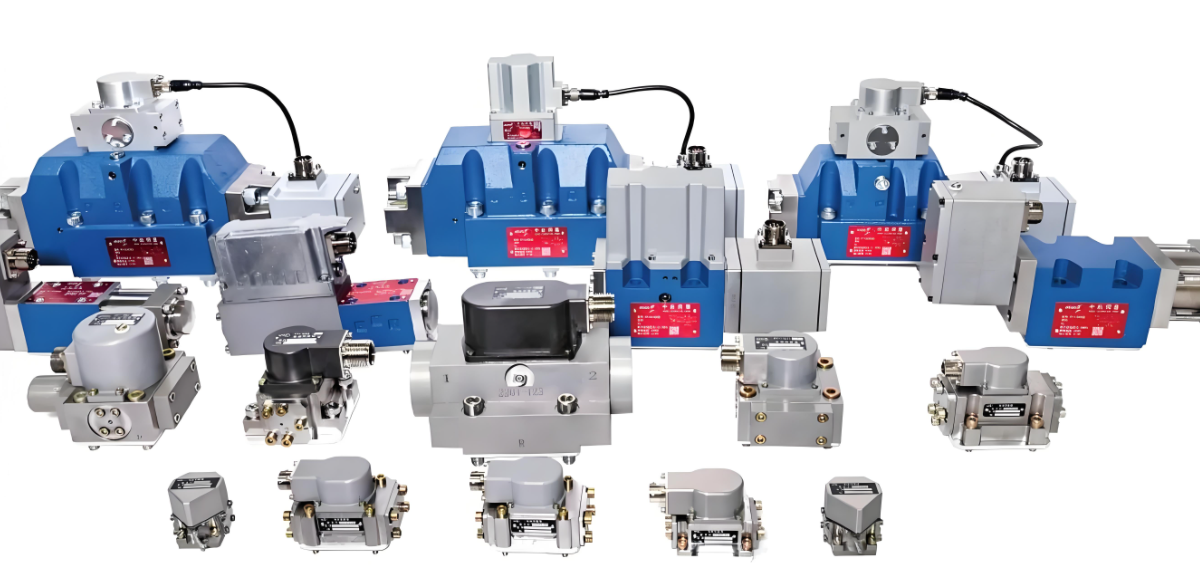
In the field of industrial automation, servo valves are an indispensable component, playing a role of precise control in the actuator. The configuration optimization of servo valves, especially the optimization of proportion, is directly related to the accuracy, response speed, and stability of system control. This article will delve into how to optimize the proportional configuration of servo valves to achieve the best proportional control.
Servo valves are valves that control flow by receiving electrical signals, converting electrical signals into fluid motion, and thereby controlling the movement of the actuator. The proportional characteristics of servo valves determine the relationship between the output flow and the input electrical signal. The quality of the proportional characteristics directly affects the accuracy and response speed of system control. Therefore, optimizing the proportional configuration of servo valves is crucial for improving the control performance of the system.
There are various methods for optimizing the proportional configuration of servo valves, including adjusting the geometric shape of the valve core, changing the structural design of the valve, optimizing the material selection of the valve, and adjusting the manufacturing process of the valve. In practical applications, choosing the appropriate servo valve proportion requires considering various factors, including the control requirements of the system, the characteristics of the actuator, and the dynamic performance of the system.
Firstly, select the appropriate proportion based on the control requirements of the system. If the system requires high-precision control, then a servo valve with a higher proportion should be chosen; if the system requires rapid response, then a servo valve with a lower proportion should be chosen. Secondly, consider the characteristics of the actuator. If the actuator is very sensitive to flow changes, then a servo valve with a higher proportion should be chosen; if the actuator is not very sensitive to flow changes, then a servo valve with a lower proportion can be chosen. Finally, also consider the dynamic performance of the system. If the system requires rapid response, then a servo valve with a lower proportion should be chosen; if the system requires stable operation, then a servo valve with a higher proportion can be chosen.
Optimizing the proportional configuration of servo valves is a complex task that requires comprehensive consideration of various factors. Only by deeply understanding the working principle of servo valves and familiarizing with various optimization methods can the optimal proportional configuration be truly achieved, enhancing the control performance of the system and realizing precise control in the field of industrial automation.
In general, the proportional configuration optimization of servo valves is a systematic project that requires comprehensive consideration from multiple dimensions. By optimizing the proportional configuration of servo valves, not only can the control performance of the system be improved, but also the stability and reliability of the system can be enhanced, providing more accurate and efficient solutions for applications in the field of industrial automation.