
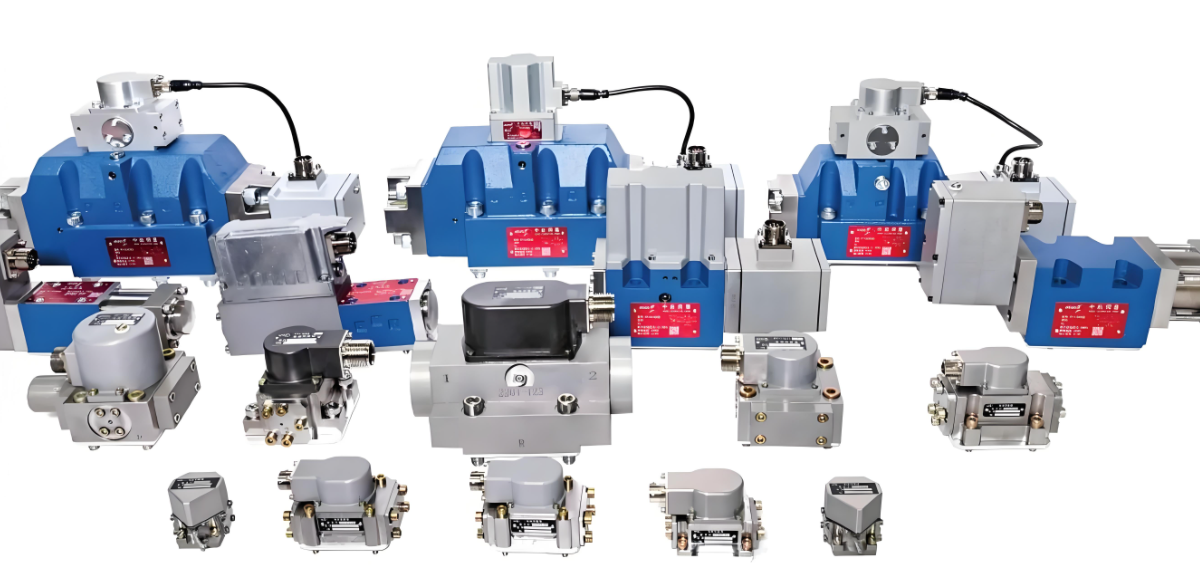
As the core precision component of electro-hydraulic control systems, servo valves are one of the key components in the high-end equipment manufacturing field, running through core industrial scenarios such as aerospace, energy equipment, precision manufacturing, and heavy industry metallurgy. After years of localization efforts, the domestic servo valve industry will officially enter a period of deep transformation in 2026, characterized by scale expansion, pattern reconstruction, technological breakthroughs, and mode upgrades. The industry is no longer limited to simple product substitution, but is moving towards a high-quality stage of technological independence, intelligent upgrading, full chain services, and ecological improvement. At the same time, pain points such as high-end technology bottlenecks, supply chain shortcomings, and lagging industry standards still exist, presenting both opportunities and challenges.
1、 Industry restructuring: clear pyramid stratification, domestic substitution entering deep water areas
The current domestic servo valve industry presents a clear pyramid competition pattern, and the speed of market stratification and reshuffling continues to accelerate. The high-end market has long been monopolized by international giants such as Moog, Parker Hannifin, and Honeywell. With decades of technological accumulation, mature product systems, and rigorous quality certifications, it firmly occupies ultra-high barrier scenarios such as aerospace, high-end nuclear power, and high-precision testing equipment, and holds the core technology standards and patent discourse power in the industry.
The mid-range industrial market has become the core competitive battlefield for domestic enterprises. Top domestic brands rely on cost-effectiveness, localized services, and rapid customization advantages to continue to seize market share in metallurgy, general machine tools, conventional energy, engineering machinery, and other scenarios. According to industry data in 2026, the overall localization rate of domestic servo valves has exceeded 65%, with a localization rate of over 80% in the mid-range field. However, the localization rate of high-end aviation and nuclear power grade servo valves is still less than 30%, indicating a vast space for substitution. The low-end market presents a situation of intense homogenization competition and frequent price wars. A large number of small and medium-sized manufacturers focus on the production of universal servo valves, with uneven product accuracy, stability, and service life. The pace of industry clearance continues to accelerate.
From the perspective of market size, the industry's growth momentum continues to shift, with traditional heavy industry demand steadily bottoming out, and emerging tracks such as low altitude economy, humanoid robots, and high-end new energy equipment becoming core increments. It is expected that the compound growth rate of the domestic servo valve market will remain at around 11% from 2026 to 2030, and the overall market size is expected to exceed 22 billion yuan by 2030, highlighting the resilience of industrial growth.
2、 Existing core pain points in the industry: Multiple bottlenecks constrain the ascent of the value chain
While the industry is rapidly developing, multiple structural pain points still constrain the domestic servo valve industry's leap towards the global high-end value chain, becoming a core obstacle to the high-quality development of the industry.
The prominent barrier between core technology and materials is the primary challenge. High end servo valves have extremely high requirements for special alloy materials, precision machining processes, and micrometer level assembly technology. There are still shortcomings in the fields of high-end valve core materials, wear-resistant coatings, and high-frequency core algorithms in China, and some core chips and precision components still rely on imports. At the same time, the domestic industry has weak discourse power in international standards, accounting for less than 10% of ISO related technical proposals. The product certification system and performance testing standards are not in line with international standards, resulting in obstacles for domestic high-end products to go global and adapt to high-end scenarios.
Secondly, there are shortcomings in product maintenance and adaptation to working conditions. Servo valves belong to high-precision components and have strict requirements for the cleanliness of hydraulic media. Data shows that over 45% of hydraulic system failures are caused by fluid pollution, and impurity particles above 10 microns can cause a 20% decrease in the operating efficiency of servo valves. Compared to the stable operation and maintenance cycle of 4000-6000 hours for imported products, some domestic products still have a gap in stability and durability under extreme high and low temperatures, high vibrations, and long-term continuous working conditions, which limits the penetration rate in high-end scenarios.
In addition, the shortage of industry talents and the imperfect industrial ecology have become prominent issues. Servo valves belong to the interdisciplinary field of mechatronics and hydraulic integration, and there is an urgent need for composite talents with mechanical design, hydraulic control, and intelligent algorithms. Currently, there is a talent gap of 23000 people in the industry, and core R&D and process debugging talents are scarce. At the same time, small and medium-sized manufacturers have insufficient R&D investment, prioritize production over R&D, and create an uneven innovation atmosphere in the industry, resulting in a lag in the pace of high-end technology iteration compared to market demand.
3、 Technological iteration direction: the core trend of electromechanical hydraulic integration and intelligentization
In order to break through the bottleneck of industry development, the domestic servo valve industry's technology research and development direction in 2026 will highly focus on five core dimensions: high precision, high frequency response, intelligence, integration, and long service life. The pace of technological iteration will continue to accelerate.
The integration of electromechanical and hydraulic systems has become the mainstream research and development direction. The industry is gradually moving away from the single mechanical structure upgrade concept and deeply integrating hydraulic control, electronic sensing, and intelligent algorithms to develop integrated intelligent servo valves. The new servo valve is equipped with built-in sensors and data acquisition modules, which can collect real-time operating data such as pressure, flow rate, temperature, vibration, etc., realizing fault self diagnosis, adaptive adjustment of working conditions, and real-time monitoring of operating status, completely solving the pain points of traditional servo valves that cannot be digitally controlled.
At the same time, high-frequency response, low energy consumption, and modular technology continue to break through. Top enterprises focus on tackling variable natural frequency control and precise pressure closed-loop regulation technology, significantly improving the response speed and control accuracy of servo valves, and adapting to the ultra-high precision requirements of humanoid robots, precision semiconductor equipment, and high-end aviation equipment. The popularization of modular design enables servo valves to quickly adapt, disassemble, and maintain according to different working conditions, effectively reducing equipment operation and maintenance costs and adapting to industrial scale application scenarios. In addition, green energy-saving technology has become a new increment. The new generation of energy-saving servo valves can reduce system energy consumption by more than 20% by optimizing the flow channel structure and intelligent load regulation, perfectly meeting the industrial transformation needs under the dual carbon policy.
4、 Business Model Upgrade: Transitioning from Single Product Sales to Full Lifecycle Services
As market competition shifts from price competition to value competition, the business model of the servo valve industry is undergoing fundamental changes, completely abandoning the traditional extensive model of "single product production, low price sales" and gradually shifting towards a full lifecycle solution model of product+technology+data+operation and maintenance.
At present, the leading enterprises no longer only sell servo valve products, but rely on the industrial Internet platform to provide downstream customers with customized selection, system commissioning, remote operation and maintenance, fault warning, equipment transformation, and data analysis integrated services. Customize exclusive hydraulic control solutions and process parameter packages for different industries such as metallurgy, thermal power, and high-end machine tools, greatly improving equipment adaptability and operational efficiency, and continuously increasing customer stickiness.
Meanwhile, new business models such as remote operations and subscription based services are gradually emerging. Through the data networking function of intelligent servo valves, enterprises can achieve remote monitoring, online debugging, and predictive maintenance of equipment, effectively reducing downstream equipment downtime losses, opening up a new blue ocean in the market after servo valves, and continuously optimizing the industry's profit structure.
5、 The future breakthrough path and development prospects of the industry
Based on the current situation and development trends of the industry, the next 3-5 years will be a critical window period for the servo valve industry to break through and upgrade. The industry will rely on the triple dividends of policies, technology, and the market to achieve a leap from "domestic substitution" to "domestic surpassing".
At the policy level, special policies such as national high-end equipment manufacturing, localization of key components, and equipment upgrading and renovation continue to be vigorously implemented, providing funding and policy support for servo valve enterprises' research and development innovation and capacity upgrading, and continuously forcing import substitution in the high-end field. At the market level, the four major incremental markets of industrialization of low altitude economy, iteration of military equipment, expansion of new energy equipment, and intelligent transformation of traditional industries will continue to open up industry growth space and reshape the industry demand structure.
In the long run, the industry will continue to concentrate towards the top, and small and medium-sized manufacturers with weak research and development capabilities and homogeneous products will gradually clear out. Top enterprises with core technologies, full chain service capabilities, and intelligent product matrices will occupy a dominant position in the market. With the continuous improvement of core materials, precision machining, intelligent control algorithms and other shortcomings, domestic servo valves will fully penetrate core scenarios such as high-end aviation, nuclear power, and precision electronics, while accelerating their participation in global market competition and gradually entering the core echelon of high-end hydraulic components worldwide.