
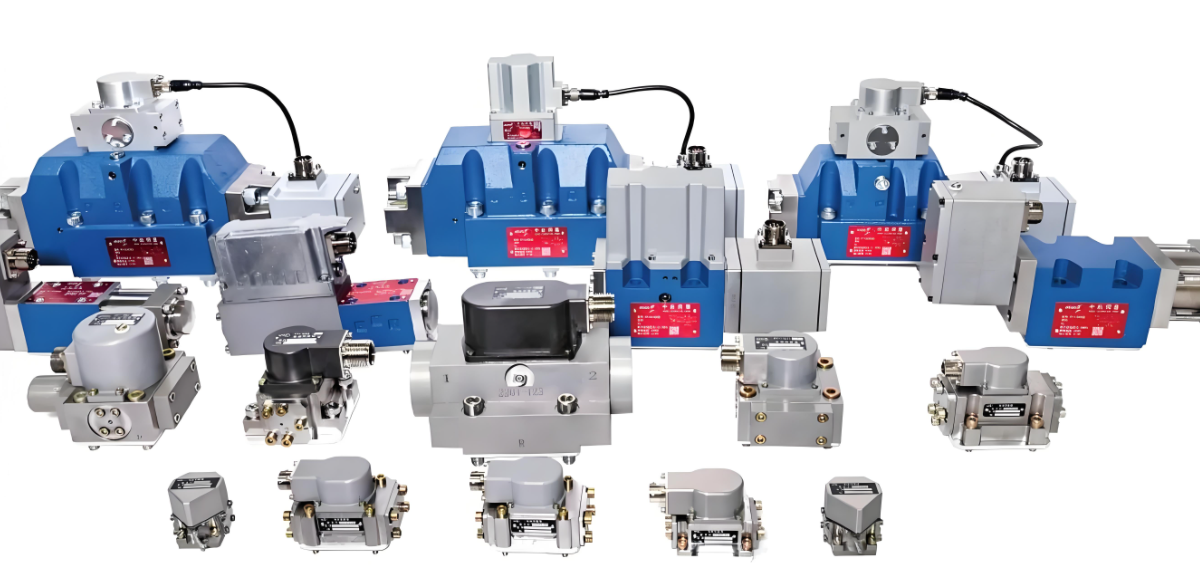
Working Principle of Tension Servo Valve
The tension servo valve is a high-precision hydraulic/pneumatic control component that realizes dynamic and stable adjustment of coil tension through closed-loop servo control technology. It integrates mechanical transmission, signal detection, and electronic control, and is widely used in winding processes that require strict tension control. Its working mechanism can be decomposed into four core links, forming a complete closed-loop control system to ensure real-time response and precise regulation of tension.
Firstly, the core component configuration: The tension servo valve is mainly composed of a tension sensor, servo controller, servo motor, valve core assembly, and feedback mechanism. The tension sensor (commonly including pull-type, pressure-type, and torque-type sensors) is installed at the key position of the coil winding path, directly or indirectly detecting the tension of the coil in real-time; the servo motor (usually AC servo motor or stepping servo motor) serves as the power source, with the characteristics of high torque, fast response, and precise positioning; the valve core is connected to the servo motor output shaft, and its displacement directly affects the flow or pressure of the hydraulic/pneumatic medium, thereby changing the tension applied to the coil; the feedback mechanism (such as a potentiometer, encoder, or linear displacement sensor) is used to collect the actual position of the valve core and feed it back to the controller to form closed-loop control.
Secondly, the dynamic control process: When the coil is in the winding process, factors such as uneven coil diameter, fluctuations in winding speed, and changes in friction coefficient will cause the actual tension to deviate from the set value. At this time, the tension sensor will immediately capture this tension change, convert the mechanical tension signal into a standard electrical signal (analog signal such as 4-20mA or digital signal such as RS485), and transmit it to the servo controller. The servo controller will compare the received actual tension signal with the preset tension value, and through algorithms such as proportional-integral-derivative (PID) adjustment, calculate the deviation compensation amount, and convert it into a control signal to drive the servo motor. The servo motor adjusts its rotation angle and speed according to the control signal, driving the valve core to move linearly or rotationally, thereby changing the opening of the valve port, adjusting the flow or pressure of the hydraulic/pneumatic medium acting on the tension execution mechanism (such as a tension roller or winding shaft), and finally correcting the coil tension to the set value. The feedback mechanism synchronously sends the valve core position signal back to the controller, realizing real-time calibration and avoiding over-adjustment or under-adjustment, ensuring the dynamic stability of tension.
In addition, the tension servo valve also has a self-adaptive adjustment function. Advanced servo controllers can learn and optimize control parameters according to changes in winding materials (such as copper wire, aluminum wire, enameled wire) and process requirements, adapting to different tension control scenarios and further improving control accuracy.
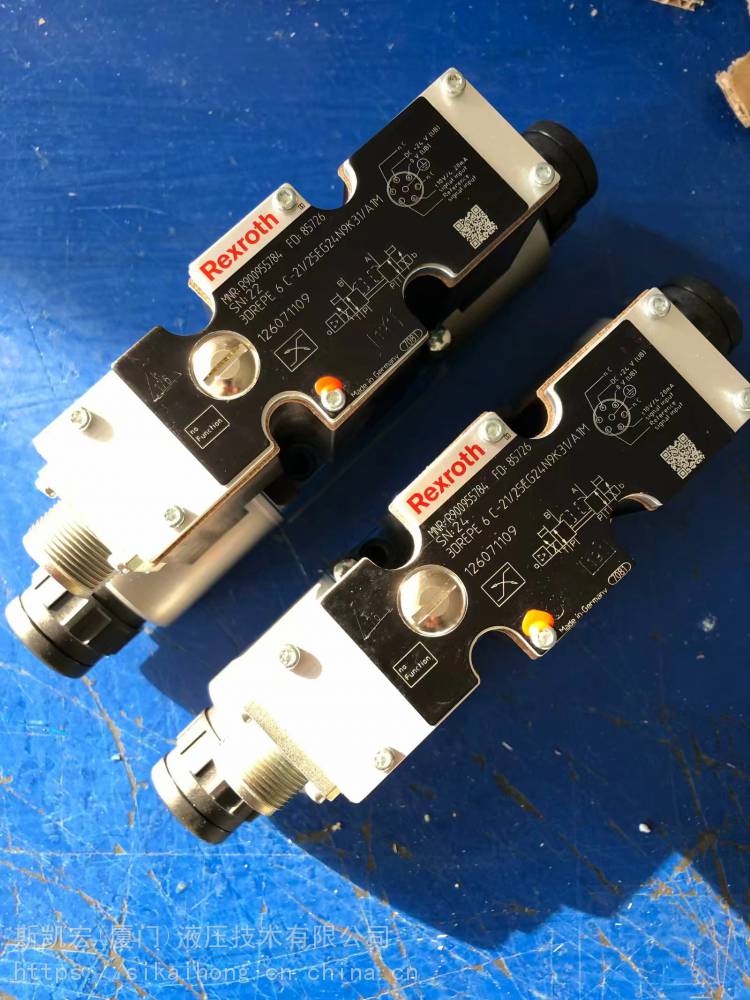
Functions of Tension Servo Valve
1. Maintain Stable Coil Tension
This is the core function of the tension servo valve. In the coil winding process, the tension stability directly determines the quality of the finished coil. Excessive tension may cause the coil to stretch, deform, or even break, affecting the electrical performance (such as resistance, inductance) and mechanical strength of the product; insufficient tension will lead to loose winding, uneven arrangement, and poor compactness of the coil, which may cause insulation damage, noise increase, or even failure during operation. Through high-speed closed-loop servo control, the tension servo valve can quickly respond to tension fluctuations (response time usually reaches milliseconds), control the tension deviation within a small range (generally ±1%~±3% of the set value), ensure that the coil maintains a constant tension throughout the winding process, and eliminate the impact of tension instability on product performance.
2. Improve Winding Accuracy
Stable tension is the premise of high-precision winding. For precision coils such as transformer windings, motor stators, and electronic components, the requirements for winding density, turn spacing, and layer alignment are extremely strict. The tension servo valve ensures that each turn of the coil is wound with uniform force, avoiding problems such as coil distortion, layer shifting, and loose turns caused by uneven tension. At the same time, combined with the precise positioning of the servo motor, it can realize synchronous coordination between tension adjustment and winding speed, further improving the consistency of winding pitch and turn number, laying a solid foundation for the high precision of the final product.
3. Extend the Service Life of the Equipment
Tension fluctuations not only affect product quality but also increase the wear and tear of winding equipment. Excessive and sudden tension changes will cause impact loads on key components such as winding shafts, bearings, guide rollers, and sensors, accelerating component fatigue and damage; unstable tension will also lead to irregular operation of the equipment, increasing the failure rate of the transmission system. The tension servo valve reduces the impact of tension fluctuations on the equipment through smooth and precise tension adjustment, reduces the wear of mechanical components, reduces the frequency of equipment maintenance and replacement of parts, and thus effectively extends the service life of the entire winding equipment and reduces equipment operation costs.
4. Improve Production Efficiency
By optimizing the coil winding process, the tension servo valve helps to improve production efficiency from multiple aspects. On the one hand, stable tension avoids the waste of raw materials caused by coil breakage, deformation, and other defects, reducing the rejection rate and rework rate; on the other hand, the high response speed of the servo control system allows the winding equipment to operate at a higher speed while ensuring quality, shortening the single product production cycle. In addition, the tension servo valve can be seamlessly integrated with the automated production line, realizing automatic tension setting, adjustment, and monitoring, reducing manual intervention, avoiding human error, and improving the continuity and stability of the production line.
Application of Tension Servo Valve
With the continuous development of industrial automation and intelligence, the tension servo valve, as a key component to ensure precise tension control, has been widely used in various fields involving coil winding, and its application scope is still expanding with the upgrading of production technology.
1. Transformer Winding Equipment
This is the most typical application field of tension servo valves. Transformers (including power transformers, distribution transformers, and precision instrument transformers) have extremely high requirements for coil quality—stable tension directly affects the insulation performance, heat dissipation effect, and voltage resistance of the transformer. In modern automated transformer production lines, tension servo valves are installed on the primary and secondary winding mechanisms, realizing precise control of copper wire, aluminum wire, and enameled wire tension. Especially for large power transformers with thick wires and high winding density, the tension servo valve can effectively avoid coil deformation and insulation damage, ensuring the safe and stable operation of the transformer.
2. Motor Winding Field
In the production of motors (such as AC motors, DC motors, servo motors, and new energy vehicle drive motors), the winding quality of stators and rotors is crucial to motor efficiency, torque, and noise. The tension servo valve is used to control the tension of enameled wire during winding, ensuring uniform arrangement and compact winding of the wire, improving the slot filling rate of the motor, and thus enhancing the motor's power density and operating efficiency. With the rapid development of the new energy vehicle industry, the demand for high-precision motor winding is increasing, and the application of tension servo valves in this field is becoming more and more extensive.
3. Cable and Wire Production
In the production process of cables, wires, and optical fibers, the tension control of the conductor and insulation layer during stranding, wrapping, and winding is essential. The tension servo valve can adjust the tension of the conductor and insulation material in real-time, avoiding problems such as uneven insulation thickness, conductor stretching, and optical fiber signal attenuation caused by tension fluctuations. It is widely used in high-voltage cables, communication cables, and optical fiber cable production lines, ensuring the consistency of product specifications and performance.
4. Other Precision Winding Fields
In addition to the above fields, tension servo valves are also used in precision electronic components (such as inductors, capacitors, and solenoid valves), medical equipment (such as medical wire coils), and aerospace components (such as precision electromagnetic coils). In these fields, the coil has the characteristics of small size, thin wire diameter, and high precision requirements, and the tension servo valve's high-precision and fast-response control capabilities can fully meet the production needs.
Summary
The tension servo valve is a key core component in the modern coil winding process, and its working principle is based on the closed-loop servo control system, realizing precise and stable adjustment of coil tension through the organic coordination of sensor detection, controller processing, motor drive, and valve core action. Its multiple functions such as maintaining tension stability, improving winding accuracy, extending equipment life, and improving production efficiency provide important guarantees for the quality and efficiency of coil production.
With the continuous improvement of industrial production's requirements for precision, automation, and intelligence, the tension servo valve is developing towards higher control accuracy, faster response speed, and stronger adaptive capacity. In the future, it will play a more important role in the upgrading of industries such as power equipment, new energy, precision electronics, and aerospace, contributing to the realization of high-quality and efficient modern production. For enterprises engaged in coil winding production, selecting a suitable tension servo valve and optimizing its control parameters is of great significance for improving product competitiveness and reducing production costs.